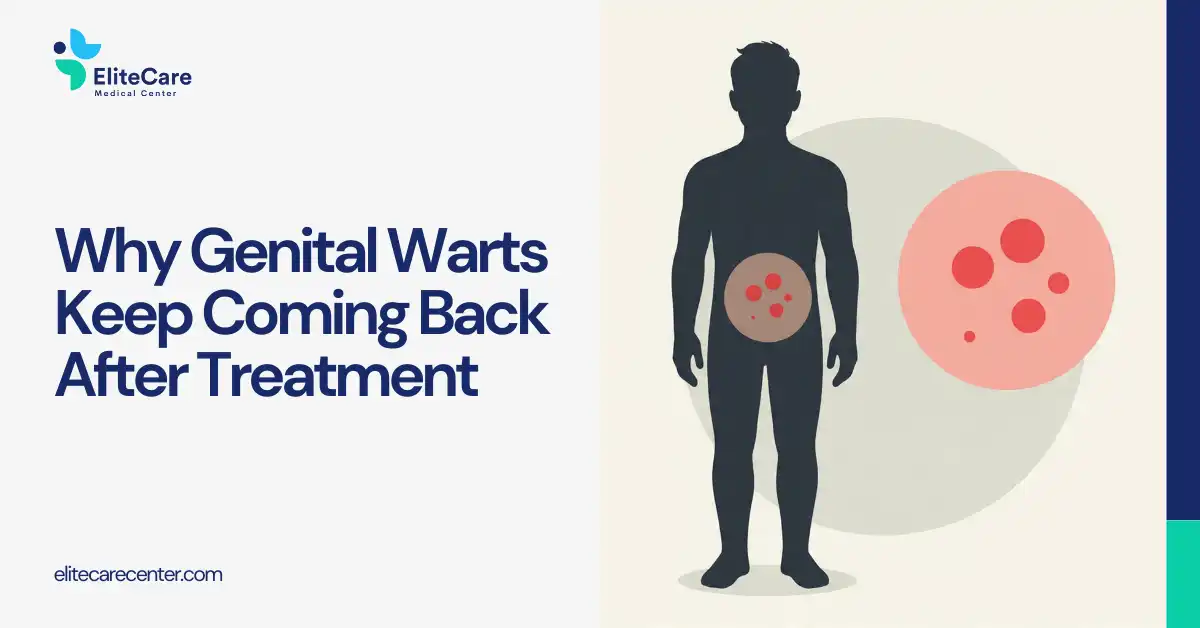
Many patients feel frustrated and confused when genital warts return after completing treatment with podophyllin or Warticon. A common reaction is to assume the medication “did not work” or that something was done incorrectly.
In reality, recurrence after these treatments is very common and usually relates to how the human papillomavirus (HPV) behaves in the body, not treatment failure.
This article explains why genital warts come back, even after proper use of podophyllin or Warticon, and what can be done to reduce recurrence.
Understanding What Podophyllin and Warticon Actually Do
Both podophyllin and Warticon (podophyllotoxin) are topical medications used to treat genital warts. They work by:
- Destroying visible wart tissue
- Stopping wart cells from multiplying
- Causing treated warts to shrink and fall off
However, these medications do not kill HPV itself. They only remove what you can see on the skin.
This distinction is critical.
Reason #1: The HPV Virus Remains After Treatment
Genital warts are caused by HPV, usually types 6 and 11. After topical treatment:
- The visible wart may disappear
- HPV can remain dormant in nearby skin cells
- The virus can reactivate later
This is the number one reason genital warts recur — even when treatment was used correctly.
Reason #2: HPV Can Stay Dormant for Months
HPV does not behave like typical infections. It can:
- Remain inactive for months or years
- Cause no symptoms
- Reactivate during stress, illness, or immune weakness
So when warts reappear, it may feel like a “new infection,” but it is often reactivation of the same virus.
Reason #3: Podophyllin and Warticon Do Not Treat Surrounding Skin
HPV often spreads microscopically beyond the visible wart.
- Medications are applied only to the wart
- Nearby infected skin may look normal
- New warts can emerge from untreated areas
This explains why recurrence often happens near the original site.
Reason #4: Immune System Plays a Major Role
The body’s immune system is responsible for controlling HPV over time. Recurrence is more likely in people with:
- Chronic stress
- Poor sleep
- Smoking habits
- HIV or other immune-suppressing conditions
- Poor nutrition
Topical treatment alone is often insufficient without immune support.
Reason #5: Reinfection From a Sexual Partner
Even after successful treatment:
- A partner may still carry HPV without visible warts
- Reinfection can occur during unprotected sex
- Warts may keep returning despite repeated treatment
Partner evaluation and treatment are often overlooked but essential.
Reason #6: Incorrect or Incomplete Use
Recurrence may also happen if:
- Medication is stopped too early
- Application instructions are not followed
- Follow-up visits are missed
- Some warts are missed or hidden
Podophyllin and Warticon must be used exactly as prescribed, and follow-up is important.
Does Recurrence Mean Treatment Failed?
No. Recurrence does not mean:
- The medication was fake
- The doctor made a mistake
- The condition is worsening
Most recurrences happen within the first 3–12 months after initial treatment. Over time, many people experience fewer or no outbreaks as the immune system suppresses the virus.
How to Reduce Recurrence After Podophyllin or Warticon
To reduce the chances of genital warts returning:
- Complete all prescribed treatments
- Attend follow-up reviews
- Strengthen immune health (sleep, nutrition, stress control)
- Avoid smoking
- Treat sexual partners when advised
- Practice safer sex
- Discuss HPV vaccination with your doctor
When to Seek Further Medical Care
You should seek medical review if:
- Warts return frequently
- They increase in number
- Treatment causes severe irritation
- You feel anxious or uncertain about the diagnosis
Clinics such as Elitecare Medical Center provide confidential evaluation, alternative treatment options (including cautery or laser), and long-term management plans for recurrent genital warts.
Final Thoughts
Genital warts often recur after podophyllin or Warticon because HPV remains in the body, not because treatment failed. Recurrence is common, especially early after treatment, and usually decreases over time with proper medical care and immune support.
If you are dealing with repeated outbreaks, professional evaluation can help tailor treatment, reduce recurrence, and give you clarity and reassurance.