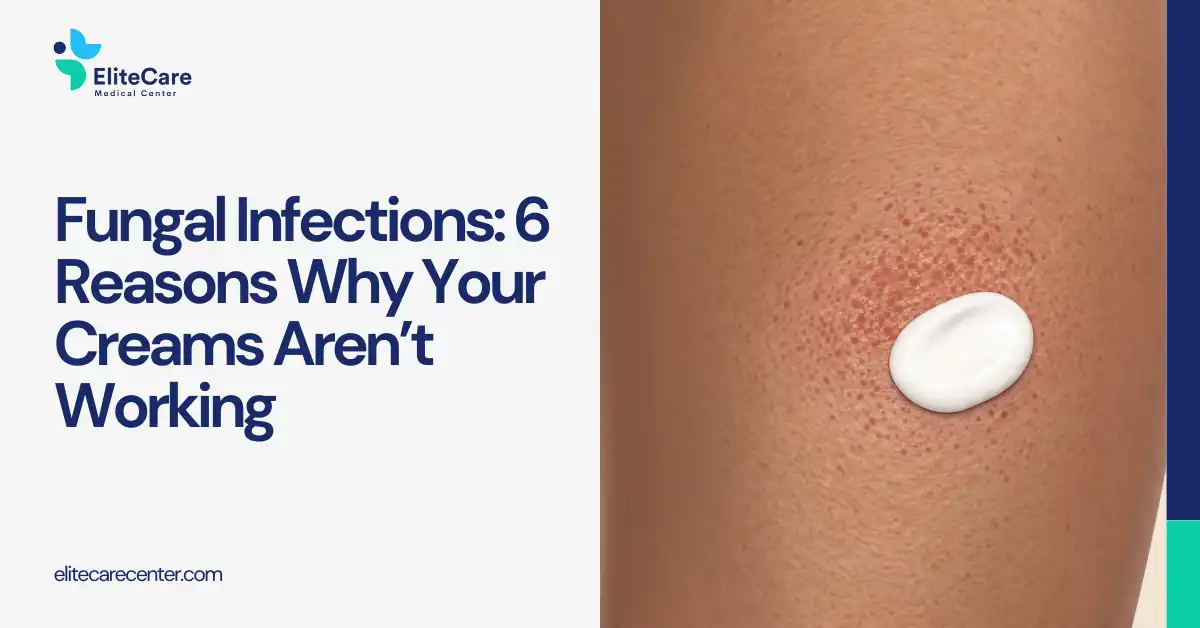
Recurrent fungal infections are one of the most common skin problems in tropical countries like Ghana. Many people report using antifungal creams repeatedly, seeing temporary improvement, and then watching the infection return — sometimes worse than before.
If your fungal infection keeps coming back despite treatment, the issue is usually not bad luck. It is often due to wrong diagnosis, incorrect treatment, or environmental factors that allow the fungus to survive and return.
This article explains why fungal infections persist and what must change for lasting treatment.
Why Fungal Infections Are Common in Tropical Climates
Fungi thrive in:
- Heat
- Moisture
- Sweat
- Poor ventilation
In Ghana’s climate, areas such as the groin, feet, armpits, scalp, and skin folds remain warm and moist for long periods. This creates the ideal environment for fungal growth and reinfection, especially when treatment is incomplete or inappropriate.
Reason #1: The Cream Is Wrong for the Infection
Not all rashes are fungal — yet many are treated as if they are.
Common mistakes include:
- Treating eczema as fungal infection
- Treating bacterial rashes with antifungals
- Using “one-size-fits-all” creams
If the condition is not truly fungal, antifungal creams will never cure it — they only mask symptoms temporarily.
Reason #2: Steroid-Containing Creams Make It Worse
One of the biggest causes of recurrent fungal infections is the use of combination creams that contain steroids.
These creams:
- Reduce redness and itching quickly
- Give a false sense of improvement
- Suppress local immunity
- Allow the fungus to spread deeper
This leads to a condition known as tinea incognito, where the infection becomes widespread, resistant, and harder to diagnose.
Many over-the-counter creams fall into this category.
Reason #3: Treatment Is Stopped Too Early
Fungal infections require consistent treatment for a sufficient duration, even after symptoms improve.
Common errors:
- Stopping cream once itching stops
- Treating for only a few days
- Skipping applications
Although the skin may look better, fungal spores can remain active and cause relapse weeks later.
Reason #4: Reinfection From Clothing, Shoes, or Bedding
Even after successful treatment, reinfection is common when:
- Clothes are reused without proper washing
- Towels are shared
- Shoes remain damp
- Bedding is not cleaned regularly
Fungi can survive on fabrics and surfaces, reintroducing infection repeatedly.
Reason #5: The Infection Is Deeper Than the Skin
Some fungal infections require oral antifungal medication, especially when they involve:
- Nails
- Scalp
- Thickened skin
- Long-standing infections
Topical creams alone may not penetrate deeply enough to eliminate the fungus.
Reason #6: Ongoing Moisture and Sweat
Treatment will fail if:
- Tight clothing is worn
- Skin stays damp for long periods
- Shoes do not dry fully
- Underwear is not breathable
Without lifestyle adjustments, the fungus keeps finding a favorable environment to grow.
Signs Your Fungal Infection Needs Medical Review
You should seek medical care if:
- The rash keeps returning
- The area keeps expanding
- The skin changes color or thickens
- Multiple body areas are involved
- Over-the-counter creams no longer work
Persistent fungal infections often require proper diagnosis and tailored treatment, not stronger random creams.
How Recurrent Fungal Infections Are Properly Treated
Effective long-term treatment usually involves:
- Confirming the diagnosis
- Stopping steroid-containing creams
- Using the correct antifungal medication
- Treating for the full recommended duration
- Addressing hygiene and moisture control
- Treating close contacts if necessary
This approach breaks the cycle of recurrence.
Final Thoughts
If your fungal infection keeps returning, the problem is rarely the fungus alone — it is often how the infection is being treated. In tropical climates, correct diagnosis, disciplined treatment, and environmental control are essential for lasting results.
Repeated trial-and-error with creams usually makes the condition worse over time. A structured medical approach is the safest way to finally clear persistent fungal infections and prevent recurrence.