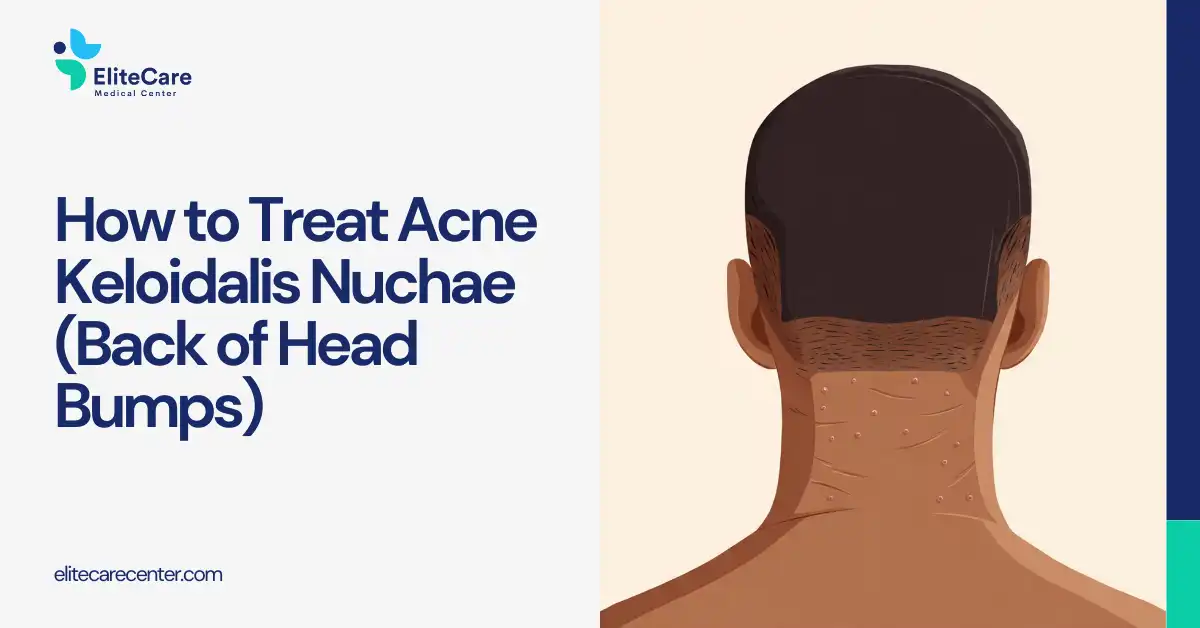
Painful or itchy bumps at the back of the head and neck are a common problem among men, especially those who keep low haircuts or visit the barber frequently. Many people think it is just “razor bumps” or an infection, but when these bumps keep returning, harden, or form scars, the condition is often Acne Keloidalis Nuchae (AKN).
AKN is a chronic inflammatory condition that affects hair follicles at the back of the scalp and neck. Without proper treatment, it can worsen over time and lead to permanent scarring and hair loss.
What Is Acne Keloidalis Nuchae?
Acne keloidalis nuchae is a condition where inflamed hair follicles at the back of the head develop into:
- Small itchy bumps
- Painful pustules
- Thickened scars
- Keloid-like plaques
Despite the name, it is not acne and not a true keloid, but it behaves like both.
Why AKN Is Common in Men
AKN is most common in:
- Men with coarse or curly hair
- Men who shave the back of the head closely
- People who get frequent barbing or razor line-ups
- Individuals exposed to friction from collars, helmets, or caps
In Ghana, frequent barbing, close shaves, and hot weather make this condition particularly common;.
What Causes Back-of-the-Head Bumps?
AKN develops due to a combination of factors:
1. Close Shaving and Razor Trauma
Cutting hair too low causes hair shafts to re-enter the skin, leading to inflammation.
2. Chronic Irritation
Repeated friction from:
- Clippers
- Collars
- Helmets
- Headrests
keeps the area inflamed.
3. Infection and Inflammation
Bacteria can infect damaged follicles, worsening swelling and scarring.
4. Delayed or Wrong Treatment
Using harsh creams, steroid misuse, or squeezing bumps often makes AKN worse.
Early vs Advanced AKN
Early stage:
- Small itchy bumps
- Mild redness
- Occasional pus
Advanced stage:
- Hard scars
- Thick plaques
- Permanent hair loss
- Painful nodules
Early treatment is critical to prevent permanent damage.
How to Treat Acne Keloidalis Nuchae
1. Stop Close Shaving
This is the most important step.
- Avoid razor cuts or skin-level trims
- Keep hair slightly longer at the back
- Use clean clippers only
2. Medical Treatment
Depending on severity, treatment may include:
- Topical anti-inflammatory medications
- Antibiotic therapy
- Targeted steroid injections (done medically, not creams abused at home)
- Anti-itch treatment
Self-medication often worsens scarring.
3. Laser Hair Reduction
Laser treatment helps by:
- Reducing hair regrowth in affected follicles
- Decreasing inflammation
- Preventing new bumps
Laser therapy is especially effective in early to moderate AKN.
4. Treat Infections Early
Any pus-filled or painful lesions should be treated promptly to avoid abscess formation and scarring.
5. Lifestyle and Barber Habits
- Avoid tight collars
- Reduce helmet friction
- Ensure barbers disinfect clippers
- Avoid frequent line-ups on the neck
What Not to Do
Avoid:
- Squeezing or popping bumps
- Using bleaching creams or unknown steroid mixtures
- Applying multiple random creams
- Ignoring early symptoms
These often lead to worse scarring.
When to See a Doctor
You should seek medical care if:
- Bumps keep returning
- Scars are forming
- Hair loss is developing
- Pain or pus is present
- Home remedies have failed
Early intervention prevents progression to severe, permanent scarring.
Clinics such as Elitecare Medical Center provide proper diagnosis and structured treatment plans for Acne Keloidalis Nuchae, including medical therapy and laser options suited for dark skin.
Final Thoughts
Acne keloidalis nuchae is not just a cosmetic issue — it is a chronic scalp condition that worsens without proper care. The good news is that early treatment, correct shaving habits, and medical intervention can control symptoms and prevent permanent damage.
If you’re dealing with recurring bumps at the back of your head, professional assessment can make the difference between manageable treatment and lifelong scarring.