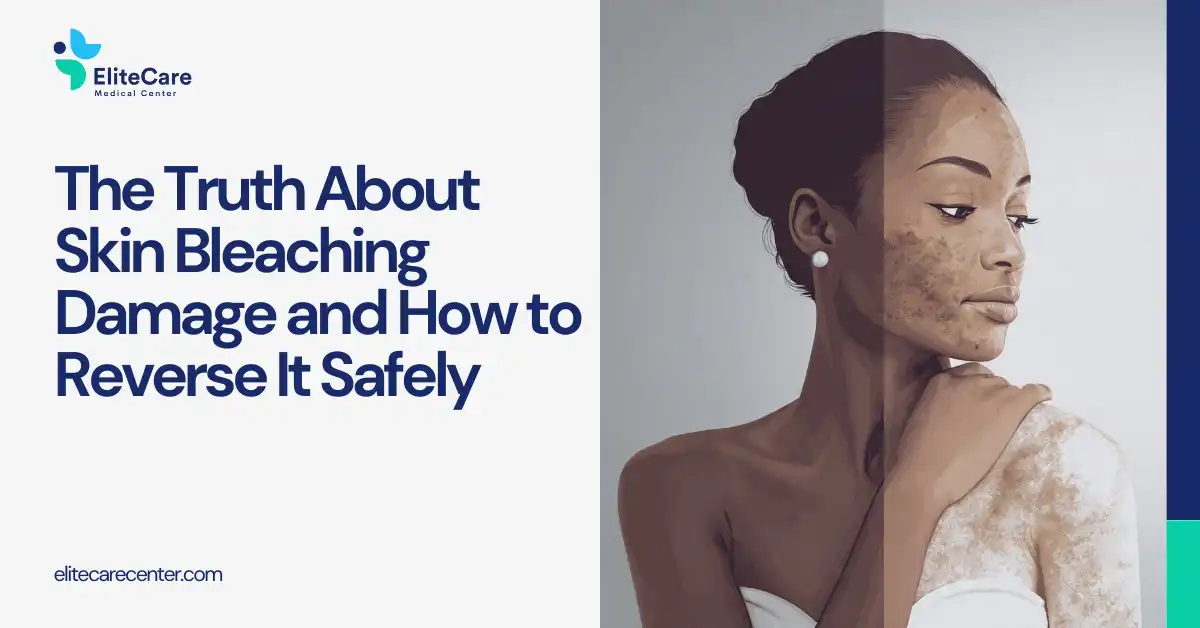
Skin bleaching remains common in many parts of Ghana, often driven by the desire to clear dark spots, even skin tone, or achieve a lighter complexion. Unfortunately, many people only realize the danger after their skin starts worsening — becoming darker, thinner, sensitive, or permanently damaged.
This article explains what skin bleaching really does to the skin, the most common forms of damage, and how damaged skin can be repaired safely under medical care.
What Is Skin Bleaching?
Skin bleaching refers to the use of products that suppress melanin production to lighten the skin. These products often contain:
- Potent topical steroids
- Hydroquinone (often in high or illegal concentrations)
- Mercury compounds
- Unknown chemical mixtures
Many are sold without regulation or mixed informally, making them especially dangerous.
Common Types of Skin Bleaching Damage
1. Steroid-Damaged Skin
Long-term steroid use causes:
- Thinning of the skin
- Visible blood vessels
- Easy bruising
- Poor healing
- Rebound darkening when stopped
This is one of the most common causes of irreversible damage.
2. Exogenous Ochronosis
This is a condition caused by prolonged hydroquinone use.
It appears as:
- Blue-black or grey patches
- Darkening that worsens over time
- Skin that no longer responds to normal treatments
Once established, it is difficult — but not impossible — to improve.
3. Severe Hyperpigmentation
Ironically, bleaching often leads to:
- Patchy darkening
- Uneven tone
- Dark knuckles, elbows, knees, and face
This happens because damaged skin overreacts by producing more melanin.
4. Stretch Marks (Striae)
Strong steroids weaken skin structure, causing:
- Permanent stretch marks
- Especially on thighs, arms, breasts, and abdomen
These do not disappear completely.
5. Increased Sensitivity and Infections
Bleached skin becomes:
- Fragile
- Easily irritated
- Prone to fungal and bacterial infections
Why Skin Often Gets Worse After Stopping Bleaching
Many people panic when their skin darkens rapidly after stopping bleaching creams. This is called rebound hyperpigmentation and happens because:
- Melanin suppression is suddenly removed
- Skin inflammation increases
- Sun exposure worsens pigmentation
This phase is uncomfortable but manageable with proper care.
Can Bleached Skin Be Repaired?
Yes — but slowly and safely.
Repair depends on:
- Type of damage
- Duration of bleaching
- Products used
- Skin type
There is no instant reversal, and aggressive treatments often worsen the damage.
Safe Ways to Reverse Skin Bleaching Damage
1. Stop Harmful Products (Gradually)
Abrupt stopping of strong steroids can worsen rebound effects. Medical supervision is important.
2. Restore the Skin Barrier
This includes:
- Gentle cleansers
- Barrier-repair moisturizers
- Anti-inflammatory skincare
Healing the skin comes before treating pigmentation.
3. Strict Sun Protection
Sun exposure worsens every form of bleaching damage.
- Daily sunscreen is essential
- Physical protection (hats, shade) matters
4. Medical Treatments
Depending on the condition, doctors may use:
- Prescription anti-inflammatory creams
- Controlled chemical peels
- Microneedling
- Laser treatments (carefully selected for dark skin)
These must be customized — not copied from social media.
What to Avoid During Recovery
Avoid:
- “Fix-it-fast” creams
- Unsupervised peels
- Mixing products
- Harsh scrubs
- Re-bleaching
These undo progress and deepen damage.
When to Seek Professional Help
You should seek medical care if:
- Your skin keeps darkening
- You notice thinning or stretch marks
- Creams no longer work
- You have patchy or blue-black discoloration
At Elitecare Medical Center, patients with bleaching-related skin damage are properly assessed and guided through safe skin recovery plans, including pigmentation control and long-term skin health restoration — especially for dark skin.
Final Thoughts
Skin bleaching damage is real, common, and often underestimated. While some effects are permanent, many forms of damage can be improved significantly with patience, correct diagnosis, and professional care.
The most important step is stopping harmful practices and choosing safe, medically guided treatment, rather than chasing quick fixes that worsen the problem.