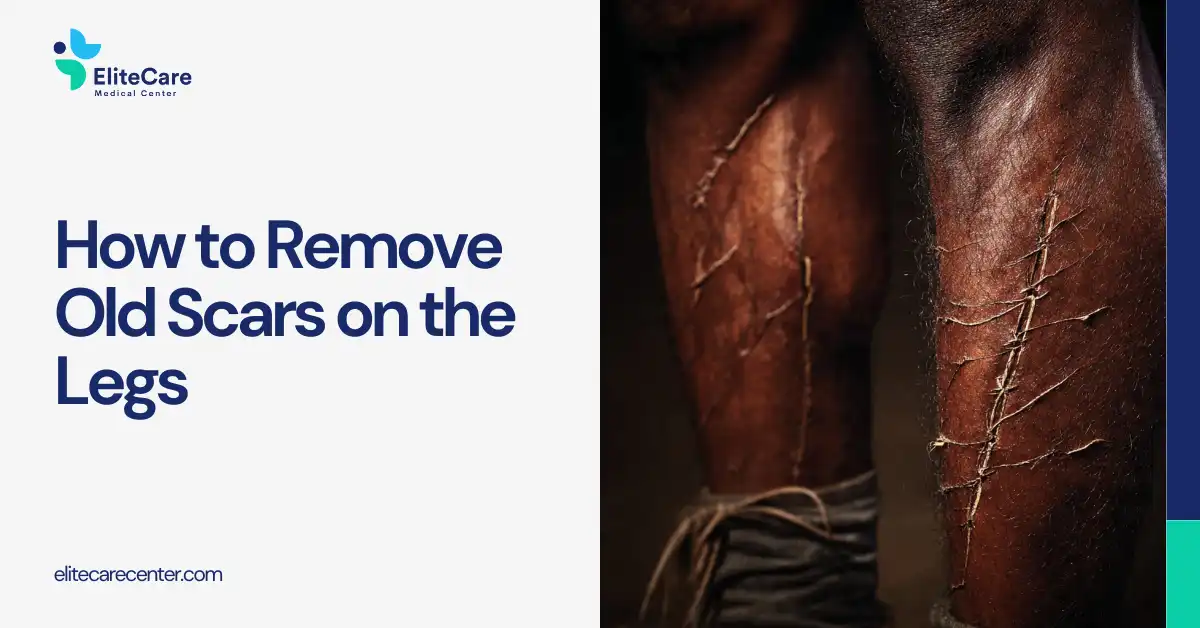
Old scars on the legs are a common concern for many people in Ghana. Whether from childhood injuries, insect bites, acne, boils, surgery, burns, or infections, leg scars can affect confidence — especially when wearing shorts, skirts, or swimsuits.
If you’ve tried creams with little success, it’s important to understand this truth:
not all scars fade on their own, and not all treatments work for old scars.
This guide explains the types of leg scars, why home remedies often fail, and the dermatologist-approved options that actually work.
Why Old Leg Scars Are Hard to Remove
Leg scars are particularly stubborn because:
- The skin on the legs heals more slowly
- Blood circulation is lower compared to the face
- Scars on the legs often become thicker or darker
- Sun exposure worsens pigmentation
- Many scars are picked, scratched, or improperly treated early
Once a scar is more than 6–12 months old, it is considered “mature” and usually requires professional treatment to improve.
Common Types of Old Scars on the Legs
Treatment depends heavily on the scar type:
- Dark scars (hyperpigmentation) – flat but darker than surrounding skin
- Raised scars / keloids – thick, firm scars that grow beyond the injury
- Indented scars – sunken scars from infections or acne
- Surgical scars – linear, sometimes thickened marks
- Burn scars – uneven texture, discoloration
Correct diagnosis is essential before treatment begins.
Why Most Creams Don’t Work on Old Scars
Many people use over-the-counter creams for years with little change because:
- Creams cannot penetrate deep scar tissue
- Old scars have excess collagen or pigment locked in the skin
- Bleaching creams often worsen scars on the legs
- Inconsistent use reduces effectiveness
Creams may help new scars, but old scars usually need advanced care.
Dermatologist-Approved Options for Removing Old Leg Scars
Chemical Peels
Chemical peels help improve:
- Dark scars
- Uneven skin tone
- Rough texture
They work by removing damaged outer layers of skin and encouraging new, healthier skin growth. Multiple sessions are usually required.
Laser Scar Treatment
Laser therapy is one of the most effective options for old scars. It helps by:
- Breaking down excess pigment
- Stimulating collagen remodeling
- Improving texture and color
Laser treatment is especially helpful for dark scars and surgical scars.
Microneedling
Microneedling uses fine needles to:
- Stimulate collagen production
- Smooth indented scars
- Improve skin texture
It is often combined with serums or platelet-rich plasma (PRP) for better results.
Steroid Injections (For Raised or Keloid Scars)
For thick or raised scars, steroid injections:
- Flatten the scar
- Reduce itching or pain
- Prevent further growth
This is one of the most effective treatments for keloids.
Prescription Scar Treatments
Dermatologists may prescribe:
- Silicone gels or sheets
- Retinoids
- Pigment-reducing medications
- Medical-grade scar creams
These are often used alongside procedures, not alone.
How Long Does Scar Treatment Take?
Scar improvement is gradual.
Typical timelines:
- 4–6 weeks: early texture improvement
- 2–3 months: visible fading
- 3–6 months: significant improvement
Most scars improve — they may not disappear completely, but they can become far less noticeable.
What Makes Scars Worse
Avoid these common mistakes:
- Picking or scratching scars
- Using bleaching products
- Applying lemon, toothpaste, or harsh scrubs
- Skipping sunscreen on exposed legs
- Inconsistent treatment
These actions can darken scars permanently.
When to See a Dermatologist
You should seek professional care if:
- The scar is more than 6 months old
- It is getting darker or thicker
- Home treatments have failed
- The scar affects your confidence
- You’re unsure what type of scar it is
Early professional care prevents further skin damage.
Final Thoughts
Old scars on the legs are common — and nothing to be ashamed of. While no treatment can erase scars completely, modern dermatology offers safe and effective options to significantly fade, flatten, and smooth them.
The key is proper diagnosis, the right treatment combination, and consistency.
Get Scar Treatment at Elitecare
Elitecare offers:
- Scar assessment
- Chemical peels
- Laser scar treatment
- Microneedling
- Keloid injections
- Post-treatment care guidance
👉 Book a consultation today and take the first step toward clearer, more confident skin.
Medical Sources & References
- American Academy of Dermatology (AAD) – Scar Treatment: What Really Works
https://www.aad.org/public/diseases/a-z/scars-treatment - Mayo Clinic – Scars: Diagnosis and Treatment
https://www.mayoclinic.org/diseases-conditions/keloid-scar/diagnosis-treatment/drc-20520902 - British Association of Dermatologists (BAD) – Scars and Keloids
https://baaps.org.uk/patients/procedures/16/scars_and_keloids - National Health Service (NHS – UK) – Scar Management
https://www.nhs.uk/conditions/scars/ - DermNet NZ – Scar Types and Treatment Options
https://dermnetnz.org/topics/keloid-and-hypertrophic-scar