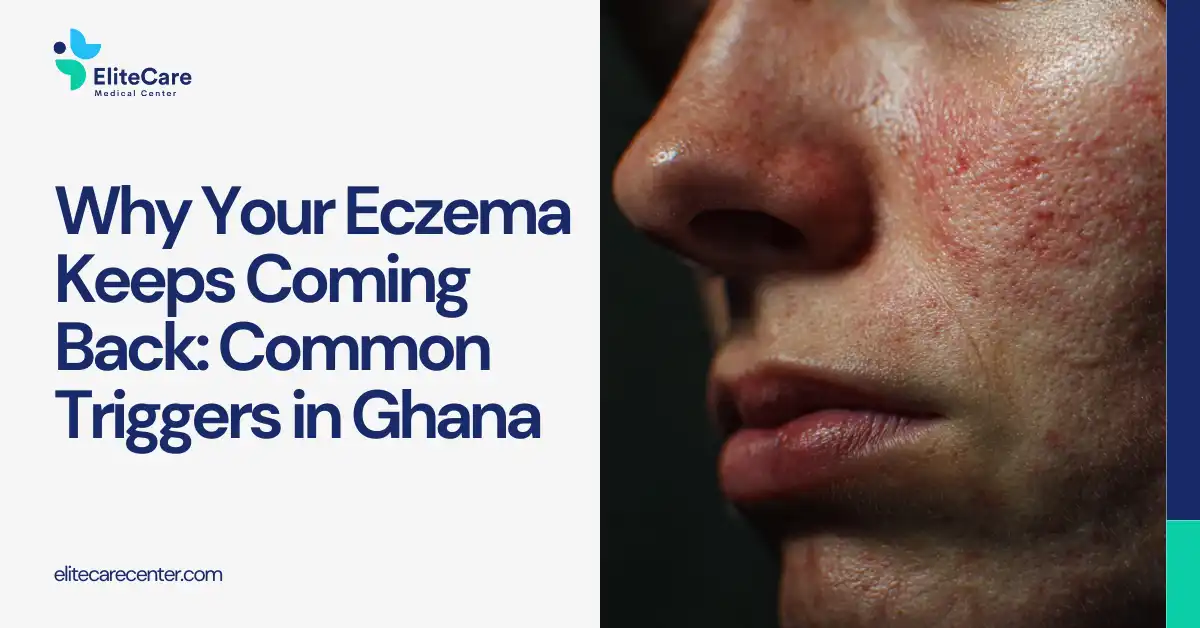
Eczema is one of the most common skin conditions seen in clinics across Ghana — affecting babies, children, and adults alike. Many patients feel frustrated because their eczema improves for a while, then flares up again, even after using prescribed creams.
If your eczema keeps returning, the issue is often not the medication, but ongoing triggers in your environment, lifestyle, or daily routine.
This article explains the most common eczema triggers in Ghana and what actually helps reduce flare-ups long term.
What Eczema Really Is
Eczema (also called atopic dermatitis) is a chronic skin condition, meaning it tends to come and go. It causes:
- Dry, itchy skin
- Red or dark patches
- Thickened or cracked skin
- Oozing in severe cases
Eczema is not contagious and is not caused by poor hygiene.
Why Eczema Keeps Coming Back
Eczema flares occur when the skin barrier is weakened and exposed to irritants. In Ghana, certain triggers are especially common.
Harsh Soaps and Detergents
This is the leading trigger.
Many soaps and detergents commonly used in Ghana:
- Strip the skin’s natural oils
- Contain strong fragrances
- Disrupt the skin barrier
This includes:
- Strong bathing soaps
- Antibacterial soaps used daily
- Laundry detergents not suitable for sensitive skin
Children’s skin is especially vulnerable.
Hot Weather and Excessive Sweating
Ghana’s heat and humidity can trigger eczema by:
- Increasing sweating
- Causing skin irritation
- Trapping moisture in skin folds
Sweat left on the skin can worsen itching and inflammation.
Incorrect Use of Steroid Creams
Steroid creams help during flares, but problems occur when:
- They are stopped suddenly
- Used too often
- Used for too long
- Used without moisturizers
This leads to repeated flare-ups and thinning of the skin over time.
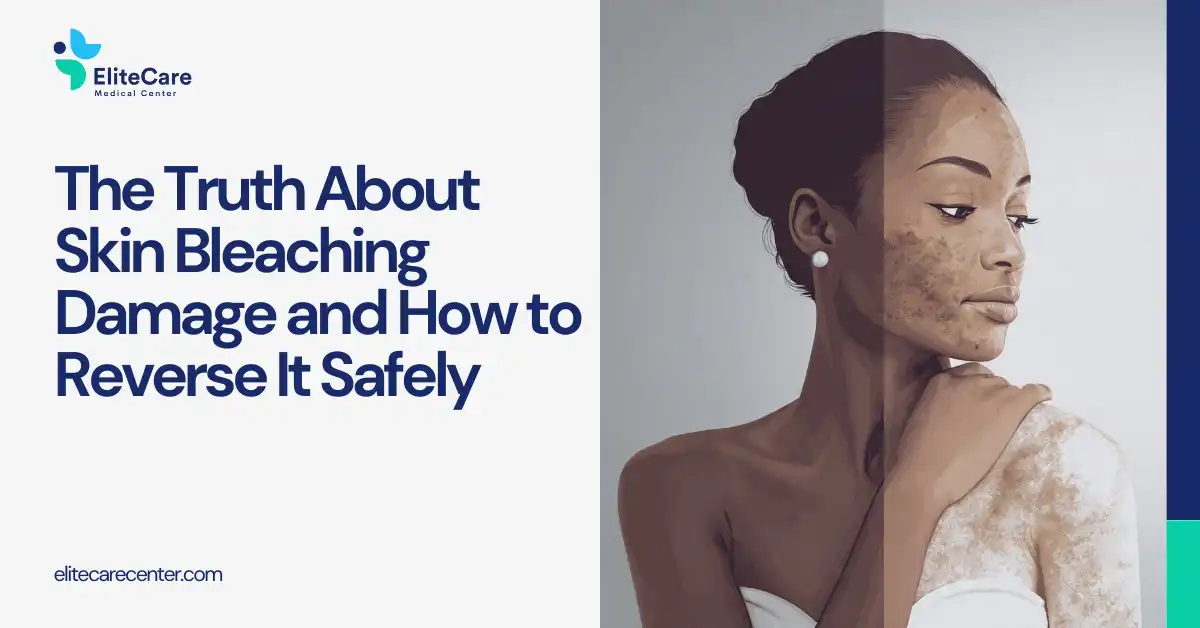
Bleaching and Lightening Products
Many adult eczema cases are worsened by:
- Skin-lightening creams
- Harsh toners
- Strong exfoliants
These products damage already-sensitive skin and trigger flares.
Dry Skin (Even in a Humid Climate)
Many people assume dry skin only occurs in cold countries — but eczema skin loses moisture easily, even in humid environments.
Without daily moisturization, flare-ups are inevitable.
Dust, Fabrics, and Environmental Allergens
Common triggers include:
- Dust from roads and construction
- Rugs and old mattresses
- Wool or rough fabrics
- Synthetic clothing
- School uniforms washed with harsh detergents
Children often flare up due to environmental exposure at school.
Food and Internal Triggers (Especially in Children)
In some children, eczema is linked to:
- Eggs
- Milk
- Groundnuts
- Seafood
Food is not always the cause, but it can worsen symptoms in sensitive individuals.
Stress and Poor Sleep
Stress affects eczema more than people realize.
Adults with:
- Work stress
- Emotional strain
- Poor sleep
…often notice worsening eczema, itching, and slow healing.
Why Treatment Seems to “Stop Working”
Most eczema treatments fail because:
- Moisturizers are not used daily
- Steroid creams are used alone
- Triggers are not avoided
- Follow-up visits are skipped
- Treatment stops as soon as the skin improves
Eczema needs maintenance, not just crisis treatment.
What Actually Helps Control Eczema Long Term
Daily Moisturizing (Non-Negotiable)
Thick, fragrance-free moisturizers should be applied at least twice daily, especially after bathing.
Trigger Identification
Every patient’s eczema is different. Identifying personal triggers dramatically reduces flare-ups.
Proper Use of Steroid & Non-Steroid Creams
Dermatologists often rotate treatments to reduce side effects while maintaining control.
Gentle Bathing Routine
- Short, lukewarm baths
- Mild, soap-free cleansers
- Immediate moisturizing after bathing
Medical Review for Severe or Recurrent Cases
Some cases require:
- Stronger topical medications
- Oral medications
- Allergy testing
- Treatment of secondary infections
When to See a Dermatologist
Book an evaluation if:
- Eczema keeps returning despite treatment
- Your child’s eczema is worsening
- The skin becomes thick, cracked, or infected
- Sleep is affected by itching
- Home care is no longer helping
Early specialist care prevents long-term skin damage.
Final Thoughts
Eczema keeps coming back not because treatment fails, but because triggers remain active. With proper skincare routines, trigger control, and medical guidance, most people can significantly reduce flare-ups and live comfortably.
Get Expert Eczema Care at Elitecare
Elitecare offers:
- Eczema assessment for adults and children
- Customized treatment plans
- Safe steroid and non-steroid therapy
- Infection management
- Long-term eczema control guidance
👉 Book an appointment today for lasting eczema relief.
Medical Sources & References
This article is informed by established dermatology guidelines and peer-reviewed medical resources, including:
- American Academy of Dermatology (AAD) – Atopic Dermatitis (Eczema): Causes, Triggers & Treatment
https://www.aad.org/public/diseases/eczema/atopic-dermatitis - National Eczema Association (NEA) – Eczema Triggers and Management
https://nationaleczema.org/eczema-management/ - British Association of Dermatologists (BAD) – Atopic Eczema Patient Information
https://www.bad.org.uk/pils/atopic-eczema - Mayo Clinic – Eczema (Atopic Dermatitis): Symptoms, Causes & Treatment
https://www.mayoclinic.org/diseases-conditions/atopic-dermatitis-eczema/symptoms-causes/syc-20353273 - National Institute for Health and Care Excellence (NICE – UK) – Atopic Eczema in Children
https://www.nice.org.uk/guidance/cg57